Вперше я пишу в моєму блозі українською. Особисто для мене це маленька перемога.
Я зіткнувся із завданням перекладу декількох морських англійських термінів російською чи українською мовами. З російської це досить нескладно, тому що це одна з мов IMO. Українські еквіваленти іноді треба створювати.
Sustainable Shipping = Устойчивые морские перевозки [IMO] = Стійкі морські перевезення [Chepok]
Sustainable Maritime Transportation System = Устойчивая морская транспортная система [WWW] = Стійка морська транспортна система [Chepok]
Sustainability in shipping = Устойчивость морских перевозок [IMO] = Стійкість морських перевезень [Chepok]
Ship recycling = Рециркуляция судов [IMO] = Рециркуляція суден [Chepok]
The UNCTAD Liner Shipping Connectivity Index = Индекс обслуживания линейным судоходством ЮНКТАД [IMO] = Індекс ЮНКТАД по зв’язаності лінійними перевезеннями [Chepok]
...
Monday, 13 November 2017
Wednesday, 11 January 2017
What does 'en route' mean for MARPOL Annex V?
I have received the following msg from a ship:
Good afternoon, the ship drifting in the South China Sea, the crew is divided opinion about food waste dumping overboard. We need your expert opinion, as there are differences in the interpretation of the words "enroute" "underway" in MARPOL.
Thank you in advance.
This made me look through certain sources and the answer is as such:
Good day!
Thank you for the question. The answer is multi-step:
1) First of all 'en route' in MARPOL has nothing to do with 'underway' or 'making way through water' in COLREG.
2) By IMO Resolution MEPC 55/23 ANNEX 18 UNIFIED INTERPRETATION TO REGULATION 15.2.1 OF THE REVISED MARPOL ANNEX I for Annex I “en route” was defined as “the ship is underway at sea on a course or courses, including deviation from the shortest direct route, which as far as practicable for navigational purposes, will cause any discharge to be spread over as great an area of the sea as is reasonable and practicable.”
3) Law company Black Rome LLP indicate that Annex I meaning is applied to Annex V as well (http://www.lexology.com/
4) However by the Dutch Supreme court decision of 2014 for Annex II, basis Article 31 of the Vienna Convention, 'en route' should mean not only the above but also that a vessel is at a course at a certain
speed causing the discharge to be spread over as great an area of the
sea as is practicable.
5) SUMMARY:
For Annexes I, II, and V “en route” = the ship is underway at sea making a certain speed on a course or courses, including deviation from the shortest direct route, which as far as practicable for navigational purposes, will cause any discharge to be spread over as great an area of the sea as is reasonable and practicable.
+
It is very important to mind the below quoted
postulates of IMO Resolution MEPC.219 (63) 2012 GUIDELINES FOR THE
IMPLEMENTATION OF MARPOL ANNEX V, 2.7.1 :
- Although discharge into the sea of limited types of garbage is permitted under Annex V, discharge of garbage to port reception facilities should be given primary consideration.
- In general the discharge shall take place when the ship is en route and as far as practicable from the nearest land. Attempts should be made to spread the discharge over as wide an area as possible and in deep water (50 metres or more).
- Prevailing currents and tidal movements should be taken into consideration when discharging into the sea is permitted.
Hope now you have the best answer.
Thank you and best regards,
Alexey O. Chepok
Мітки:
Case Study,
Green,
Practice,
Training
Friday, 4 December 2015
Sustainability as a standard for Carriers
To answer the question - why the leading Shipping companies re-structure their processes in order to become sustainable - one has to consider not only the social responsibility of the firm or the strive for cost efficiency of operations. It is the client who becomes the primary driver in the metamorphose.
Then answer the question: Why, on earth, BMW does it? :)
Thursday, 5 February 2015
The Nairobi International convention on the Removal of Wrecks, 2007 (WRC)
WRC, coming into force
on 14 April 2015, regulates the financial
liability for the shipwrecks in the coastal state jurisdiction. All vessels 300 gross tons and larger to be insured or have financial security to cover the liability under
the WRC.
The following countries are parties
to this Convention:
Vessels
flagged in these countries will need to apply for a certificate from their
respective flag state.
|
|
|
- Shipowners are financially responsible for the cost of wreck removal with coverage arranged. The most common form of this is from a P&I Club, issuing a “WRC Blue Card” as the documented proof of the cover.
- Applies to the territorial sea and Exclusive Economic Zone (EEZ).
- Ship’s wherever registered must have on board a valid WRC certificate, as evidence of insurance or other financial security, when entering or leaving the jurisdiction of another State Party. A registry-issued certificate must be presented to port state authorities upon request.
- Shipowners with ships not registered in a State that is a Party to the convention may obtain certificates from any other State that is a Party.
- Certificates issued by any State Party shall be accepted for the purposes of the WRC and shall be regarded as having the same force as certificates issued or certified by them, even if issued for a ship not registered in a State Party.
- Certificates are renewable yearly by February 20th in line with Civil Liability Certificate (CLC) and Bunker CLC certificates.
Thursday, 29 January 2015
Saturday, 11 January 2014
Churchill's Optimist and Pessimist in 3D
Today I saw the following picture posted by Laurens and could not help commenting :)
Alexey O. Chepok

This work is licensed under a Creative Commons Attribution-NonCommercial-ShareAlike 3.0 Unported License.
![]() |
| Source: Laurens Reinier Korporaal |
Sir Winston Churchill was great and brilliant. Therefore the above is a great and brilliant example of rhetoric. My opinion, such a scaling into optimists and pessimists is good for verbal fencing. It is concise, sharp and thus staggering. Say, snappy. But yet it is good for nothing in real life mining the opportunities. Why? Because it is 2D, i.e. "flat", and I would suggest using at least 3D picture of the multidimensional reality and also start allowing for more valuable post factum experience.
People all are wide spectrum and involve dynamic character. Absolute optimism and pessimism are the extreme flanges (such as infra and ultra) of the disposition range. So instead of considering just the two poles: the pessimist and the optimist, I insist on the approach based on at least four poles, namely, the "unhappy" and "happy" optimists and pessimists. If the these are graded by their utility from the worst to the best the lay-out comes as follows:
- An unhappy optimist = the one who sees the opportunity in every difficulty but every time cannot improve the former because of the scope of the latter. It does mean his/her perception of opportunities is absolutely slant and overly. This associate leads to danger.
- An unhappy pessimist = the one who sees the same difficulty in every new opportunity. One day the pessimist realises his/her personal restrictions and becomes disturbed. This mate soon becomes a burden.
- A happy optimist = the one that regularly seizes the opportunities and gets success now and then. This optimist is resourceful especially in the terms of time. Do not learn from him/her - you are wasting your time then. Join him/her.
- A happy pessimist = the one who is good at finding the difficulty in every opportunity and due to his experience becomes invaluable critic of any project. Listen to him/her but be fast if he/she becomes slow.
I believe the concept should be well clear by now. Although, here is a control question: Why did I put the "happy" pessimist the last in the row?..
Alexey O. Chepok

This work is licensed under a Creative Commons Attribution-NonCommercial-ShareAlike 3.0 Unported License.
Мітки:
Management,
People,
Training
Monday, 23 December 2013
Friday, 1 November 2013
Bulk carrier sizes
Bulk carrier classification by size along with the most common particulars:
2013-2018 Alexey O. Chepok

This work is licensed under a Creative Commons Attribution-NonCommercial-ShareAlike 3.0 Unported License.
![]() |
| Photo © Alexey O. Chepok |
| Ultramax "Nazire" in Gatun Lake (Panama Canal) |
Sizes
|
DWT, mt
|
LOA, m
|
BOA, m
|
Draft, m
|
Handysize
|
15 - 35 000
|
100 - 150
|
17 - 24
|
7 - 10
|
Handymax
|
35 - 50 000
|
150 - 180
|
22 - 28
|
9 - 10
|
Supramax
|
50 - 60 000
|
180 - 200
|
26 - 32
|
10 - 11
|
| Ultramax | 60 - 65 000 | ~200 | <32.3 | 11 - 12 |
| Seawaymax | ~60 000 | 225 | <23.8 | 8 |
| Panamax | 65 - 90 000 | 200 - 245 | <32.3 | 12 - 15 |
| Kamsarmax |
80 - 85 000
|
<229
|
32.3
|
<14.4
|
| Baby Capesize | 90 - 120 000 | 225 - 250 | 32 - 40 | 12 - 15 |
| Capesize | 120 - 200 000 | 250 - 300 | 38 - 48 | 14 - 17 |
| Dunkirkmax | 175 000 | <290 | <45 | 14 - 16 |
| Newcastlemax | ~180 000 | <300 | <50 | 14 - 17 |
Very Large Bulk (Ore) Carrier
|
200 - 300 000
|
300 - 350
|
48 - 60
|
14 - 18
|
WOZmax
|
250 000
|
330
|
57
|
18
|
| Malaccamax | 300 000 | 330-350 | ~60 | 20 |
Ultra Large Bulk (Ore) Carrier
|
> 300 000
|
> 350
|
> 60
|
> 18
|
Valemax
|
380 - 400 000
|
360 - 362
|
65
|
22 - 23
|
Chinamax
|
380 - 400 000
|
360
|
65
|
24
|
2013-2018 Alexey O. Chepok

This work is licensed under a Creative Commons Attribution-NonCommercial-ShareAlike 3.0 Unported License.
Мітки:
Fleet
Wednesday, 23 October 2013
Sunday, 20 October 2013
Commercial Operations of Water Transport
Starting from September 2012 cadets and students of Odessa National Maritime Academy have been privileged to attend academical disciplines lectured in English. I have also been involved in the process, though from the lecturers side, and launched Commercial Operations of Water Transport (COWT), i.e. the much updated version of Kommercheskaja Ekspluatacija Vodnogo Transporta (KEVT) in English. |
COWT is a 108-hour course delivered to the 4th year cadets (students) of the Maritime Law Faculty. As COWT is a branch of Commercial Management it correlates with Maritime and Business Law, Shipbroking and Chartering, Maritime Insurance, Maritime Economics, Shipping Management and Logistics. The discipline studies and elaborates the interactions within the water transport, particularly those of the shipowners and the other actors in Shipping.
All the lectures are supported by the slide-shows. Here is an example of an abridged lecture:
In conclusion I would like to present the course outline:
Commercial aspects of shipping operations
World trade and shipping
Concept of parcel size distribution
Shipping as a transport system
Major sectors in shipping
International maritime passages and commerce
Port Agency services
Port charges and dues
Combined transportation
Foreign trade operations and contracts
Actors in the shipping business
International payment terms and settling practice
The international trade legal framework
International sales contract: structure and contents
Mercantile and shipping terms in international sales contracts
Incoterms
International freight market and its structure
Freight rate mechanism and indices
Chartering infrastructure and Brokage
Chartering routine
Broker-Customer relationship
Charter-party, Bill of Lading: role, types and functions
Carrier's liability as set in the international agreements
Contractual relations in Tramp Shipping
Contractual relations in Liner Shipping
Forms of competition in Liner Shipping
Contractual relations in combined shipping
Standard voyage charter-party forms
Common terms in the voyage charter in relation to ship
Common terms in the voyage charter in relation to cargo
Common terms in the voyage charter in relation to places of loading and delivery
Lay time, demurrage and despatch
Freight
Other terms and conditions in voyage charter-party
Lending and hiring ships on a time basis. Lessors and lessees
Time-Charter. Typical terms, clauses, standard forms
Bareboat-Charter. Typical terms, clauses, standard forms
Slot-Charter, Daily-Charter, Trip-Charter
Concept of insuring maritime risks
Insurance for shipowners and charterers
Insurance for cargo interests
Product and its quality in Shipping
Integrity and timely delivery of cargoes
Initial handling of cargo claims
Cargo care
Keep yourself refreshed!
A.O. Chepok

This work is licensed under a Creative Commons Attribution-NonCommercial-ShareAlike 3.0 Unported License.
Мітки:
Calc,
Management,
Marine English,
People,
Training
Friday, 4 October 2013
О себе и об английском языке
Современный морской мир говорит на английском. Английский в море служит не только профессиональным языком, но и языком межнационального и делового общения.Учитывая глобальные тенденции, нас ожидает всё большее его господство.
Моряки знают, что кроме британского и американского английского существует также его "безнациональная" морская разновидность, официально базирующаяся на стандарте ИМО.
|
Увы, минимальный стандарт ИМО был разработан ещё в те времена, когда судоходство имело намного меньшую интенсивность. Основным предназначением морского стандартного словаря-разговорника было межнациональное общение судно-судно или судно-берег, а его знание обычно требовали от судоводителей и радиооператоров. Моряки других специальностей для работы в своих национальных экипажах в морском английском особенно не нуждались и успешно без него обходились.
Время прошло. Сегодня, благодаря глобализации и открытости международного рынка труда для моряков, английский язык понадобился именно для ежедневного общения на борту судна, с офисами компаний, с представителями организаций и органов власти. Объём информации на английском языке увеличился в порядки, и стандартным набором фраз уже не обойтись. Более того, ситуации, в которых происходит общение, носят теперь динамичный характер. Язык стал рабочим инструментом.
Владение морским английским стало необходимостью для всех, кто плавает в смешанных экипажах, в особенности это коснулось механиков - наших наиболее востребованных на сегодняшний день специалистов.
Своим первым навыкам и первому большому интересу к английскому языку я обязан отцу и старшему брату. Всё начиналось со слушания адаптированной книги "Острова сокровищ" и попыток чтения газеты "Moscow News". Затем была средняя школа со школьным курсом английского, начавшимся в 4-м классе, год изучения которого почти ничего не дал. Как результат, последовало недовольство моей мамы, и так я попал в руки к одному из наиболее известных и уникальных учителей в Одессе - Геннадию (Генриху) Петровичу Покрывайло.
Проучившись у Покрывайло несколько лет, я понял, что хочу заниматься лингвистикой и иностранными языками профессионально. "Moscow News" было уже понятно и неинтересно: меня увлекало чтение "International Herald Tribune" и даже журнала "Time" :). Толчком в изучении языка послужила книга консолидированного издания трилогии "The Lord of the Rings" (J.R.R. Tolkien), которую взял у знакомого брат и принёс на почитать. Книга увлекла меня сюжетом и языком. Она была такая объемная, что до конца я так и не добрался до сих пор :). Но в тот момент я почувствовал вновь огромный интерес к англоязычному миру с его богатым переплетением культур.
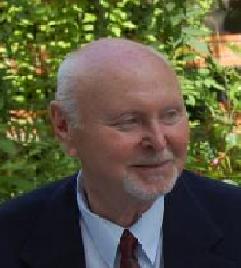
Последовала подготовка к поступлению в ЛГУ. Однако судьба распорядилась иначе. Именно Геннадий Петрович отговаривает меня от безденежья советского филолога и советует применять английский язык как инструмент, а не профессию. И я принял этот совет от своего учителя.С тех пор изучение языка никогда не прекращалось. После того как я начал плавать, я учил и практиковался в рейсах. Ещё курсантом давал уроки английского. Сдал TOEFL. Продолжал совершенствоваться в экипажах, где русского языка почти или вообще не было. Хотя правильного английского там не было тоже ...
Современный морской английский имеет много оттенков: индийский, греческий, филиппинский, китайский, арабский, шотландский, испанский, русский и т.д. Поэтому понять, что тебе говорят, уже означает 2/3 успеха. Но наша работа заставляет задействовать и оставшуюся треть, т.е. - умение сказать. Не без преувеличения, от владения языком зависят не только карьерный рост, но и само наличие хорошей работы.
Морской английский - это английский профессионалов. При этом предлагается не рафинированный школьный или даже институтский/университетский курс, по-обыкновению напичканный грамматикой, произношением артикля "зэ" или "вэ", телеграммами с пароходов "Комсомолец" и "Утопия", криками о помощи по радио: "Mayday, mayday!"
По моему убеждению, должный результат достижим только после увеличения словарного запаса ученика, для чего делается упор на чтение и восприятие на слух. Этот подход подходит в равной степени для людей разных возрастов и разных профессий. Пользуясь этой методикой изучения английского языка, я параллельно учил голландский и немецкий языки. (Последний получилось развить, а голландский без практики общения за несколько лет просто "утонул".)
При обучении важна ориентация на индивидуальные цели каждого, подготовка к встрече с реальными ситуациями, обучение живому профессиональному языку. В общем концепцию подхода можно сформулировать так: английский язык как инструмент достижения целей.
Таким образом, я учу и применяю английский язык уже 30 лет. Продолжаю этот бесконечный процесс совершенствования и пользуюсь своими навыками и опытом. Английский - это очень интересно!
А.О. Чепок

Данный текст защищен авторским правом и предоставляется вам по свободной лицензии Creative Commons Attribution-NonCommercial-NoDerivs 3.0 Unported License.
Мітки:
Marine English
Monday, 1 July 2013
Украина - сертификаты на отгружаемый груз ЖРК и железной руды
UK P&I в своём циркуляре № 896-06/13 (Carriage of Iron Concentrate and Iron Ore Fines Cargoes - Ukraine - International Group Circular) информирует о завышении показателя предельной влажности для транспортировки (Transportable Moisture Limit, TML) в сертификатах на груз, выдаваемыми украинскими лабораториями, в том числе и в сертификатах Грузового Бюро.
Железнорудная мелочь и ЖРК относятся к группе грузов А Международного кодекса по твёрдым навалочным грузам (International Maritime Solid Bulk Cargoes Code, IMSB). Их транспортировка возможна при соблюдения условия, когда влагосодержание груза меньше показателя предельной влажности для транспортировки (TML). Тем самым, завышая TML, грузоотправитель получает возможность отгрузить влажный груз в нарушение требований кодекса и подвергает опасности судно.
Более детально о требованиях к перевозке ЖРК и железнорудной мелочи можно прочесть в статье Cargo Liquefaction.
Thursday, 13 June 2013
Offshore Quest - Maersk Quest For Oil
The maritime colossus Maersk Group, which incorporates such subsidiaries as Maersk Oil, Maersk Drilling, Maersk Line, APM Terminals, and many other business units, has offered a real-time strategy computer game.
In contrast with most other strategies it is not only the real-time but also the real-world entertainment, as you have to follow all the long process of oil exploration before you start pumping it out to earn your first petrodollars.
The game is available for Windows and MacOS X, free to download at QuaestForOil.com.
Wednesday, 29 May 2013
Безопасная практика перевозки никелевой руды
Морская перевозка никелевой руды очень опасное мероприятие. Почему? Потому, что этот саморасжижающийся груз - выгодный товар. Огромное коммерческое давление заставляет капитана принимать груз, который имеет чрезмерное содержание влаги. В странах, где деньги решают судьбу разрешения на перевозку, никелевая руда может стать "черной меткой" для всего судового экипажа.
О летальных свойствах руды должны знать каждый. Груз можно возить. Но только при соблюдении ряда определенных условий. Для этого и создано руководство по безопасной практике перевозки никелевой руды от Intercargo (ниже).
Мітки:
Cargo
Wednesday, 1 May 2013
Ports and ships as seen by Jane Bennett
Jane Bennett was a complete stranger to me until I struck on a painting of m/v Sirius Leader I sailed on ten years ago.
Now, when I know Jane as a talented artist, I praise her featuring maritime topics on canvas. I have seen several successful examples of using industrial paintings as a means of decor for an office. Shipping related art is not uncommon, and here you are a good example of such a sort which I would consider on my walls :)
You can introduce yourself to the world of Jane Bennett starting from this link: http://www.artfiles.com.au/janebennett.
![]() |
| Sirius Leader (Jane Bennett) |
Now, when I know Jane as a talented artist, I praise her featuring maritime topics on canvas. I have seen several successful examples of using industrial paintings as a means of decor for an office. Shipping related art is not uncommon, and here you are a good example of such a sort which I would consider on my walls :)
You can introduce yourself to the world of Jane Bennett starting from this link: http://www.artfiles.com.au/janebennett.
Wednesday, 3 April 2013
Service Network Management by Maersk

An excellent simplistic induction into the management of the container fleet network. If anyone ever wondered how Maersk distribute their 15%+ global TEU-capacity share, then this clip is an induction. Networking resources, adapting to changes, facts and general overview only - this video will make the reading stand alive and no more be the chore. Recommended to any student before reading scores of pages on the topic.
Мітки:
Fleet,
Management
Monday, 18 March 2013
Cellular shipping - the shot snapped
As of today, March 18, 2013 Alphaliner estimates the world's Liner Shipping to amount to 5,925 ships active on liner trades or 16,943,189 TEU; including 4,944 fully cellular ships or 16,474,446 TEU.
Their Top 100 list of the carriers is based on the sheer TEU power of a liner company. The Top 30 is shown as following:
The entire Top 100 rating is accessible here.
Their Top 100 list of the carriers is based on the sheer TEU power of a liner company. The Top 30 is shown as following:
![]() |
| Source: www.alphaliner.com |
The entire Top 100 rating is accessible here.
Thursday, 21 February 2013
Sails of the 21st century
DigInfo reports on retractable sails project. This kind of fuel-economizer seems quite feasible both technically and economically.
So the chances that it be installed on a real ship are rather high despite the 2.5 mln USD fitting cost for a single retractable sail. There are many other technologies that would provide the comparable fuel-saving effect at less CAPEX. Still ...
I have no doubt that Japanese owners would consider trying the sails soon.
So the chances that it be installed on a real ship are rather high despite the 2.5 mln USD fitting cost for a single retractable sail. There are many other technologies that would provide the comparable fuel-saving effect at less CAPEX. Still ...
I have no doubt that Japanese owners would consider trying the sails soon.
Wednesday, 20 February 2013
Monday, 18 February 2013
О качестве услуг транспортной перевозки (из лекций по КЭВТ)
Классическая концепция качества транспортной услуги
Что такое качество?
Важнейшие свойства качества
Ожидания потребителя
Удовлетворенность потребителя
А.О. Чепок

Данный текст защищен авторским правом и предоставляется вам по свободной лицензии Creative Commons Attribution-NonCommercial-ShareAlike 3.0 Unported License.
Под качеством транспортной услуги принято подразумевать степень обеспечения сохранной и своевременной доставки грузов по назначению или степень фактического выполнения перевозчиком обусловленных договором перевозки требований грузовладельца.
Перевозчик может считать, что перевозка выполнена качественно, если:
- груз перевезен в сроки;
- количество груза не изменилось;
- качество (свойства) перевозимых товаров не понизилось;
- не возникли дополнительные непроизводственные расходы (издержки на перевеску, пересчет, сортировку, перегрузку, пересылку груза; на ремонт транспортных единиц или тары; на судебные издержки или штрафы).
Отсюда важнейшими качественными показателями работы водного транспорта принято считать сохранность и срок доставки груза.
Однако классическая концепция качества не объясняет в полной мере существующие требования со стороны грузовых интересов, например, их заинтересованность в сервисе "точно в срок", в использовании "виртуального прибытия" и др.
![]() | ||
| Copyright © 2000 A.O. Chepok | ||
| PCTC Koh Jin ― японское качество перевозок автомобилей одно из самых высоких |
Что такое качество?
По международному стандарту ISO 9000:2000 качество – это совокупность свойств и характеристик объекта, которые придают ему способность удовлетворять обусловленные или предполагаемые потребности. Под объектом может подразумеваться как продукция, так и услуга.
Близким к этому определению, но коренным образом по-иному расставляющим акценты, является определение, данное одним из современных гуру управления качеством — Джеймсом Харрингтоном:
Качество — это удовлетворение ожиданий потребителя за цену, которую он себе может позволить, когда у него возникла потребность.
Важнейшие свойства качества
Из определения качества следует ряд его важных свойств:
- качество продукции или услуги окончательно проявляется только при эксплуатации или потреблении, т. е. качество выявляется потребителем;
- качество — это относительное и динамическое понятие: со временем потребности потребителя могут изменяться и производителю продукции или услуги необходимо периодически пересматривать требования к качеству своей продукции, для того чтобы качество оставалось на прежнем уровне;
- качество — это совокупность свойств, поэтому необходимо применение показателей для его описания и количественные характеристики для его оценки и сравнения;
- качество взаимосвязано с ценой, но напрямую не зависит от неё.
Ожидания потребителя
В сфере услуг при анализе качества принято дополнительно выделять и рассматривать такие ожидания потребителя как надежность и удобство пользования услугой.
Если надежность или стабильность (удовлетворительного) качества последовательных перевозок не велика, то очевидно, что потребитель остается недовольным. В том случае, если удобство пользования транспортной услугой ниже ожидаемой (напр., по сравнению с общепринятыми стандартами на рынке), то не следует говорить о ее удовлетворительном качестве.
Удовлетворенность потребителя
Удовлетворенность потребителя услуги определяется соотношением ее качества к цене. Удовлетворенность потребителя услуги еще называют ценностью услуги.
Напомним себе, что задачей, которую преследует потребитель транспортных услуг перевозки, является получить наименьшую стоимость транспортировки своего груза от пункта отправки до пункта назначения при минимальных потерях времени и средств.
Исходя из того, что потери времени и средств можно свести и выразить в общей денежной форме, можно обозначить удовлетворенность потребителя транспортной услуги тем, что его суммарные фактические затраты на перевозку единицы груза (т. е. стоимость самой перевозки и все потери, отнесенные к одной единице груза) лежат в ожидаемых пределах. Эта удовлетворенность тем выше, чем ниже фактические затраты затрат ожидаемых.
В реальной ситуации ожидаемые затраты динамически определяются рыночными ценами, технологией перевозки и опытом (историей) предыдущих перевозок.
А.О. Чепок

Данный текст защищен авторским правом и предоставляется вам по свободной лицензии Creative Commons Attribution-NonCommercial-ShareAlike 3.0 Unported License.
Мітки:
Management,
Training
Subscribe to:
Posts (Atom)
Blog's Most Popular Posts last week
-
Fresh Water Allowance (FWA) is the amount by which a ship's mean draft changes when she moves from the sea standard salt water (SW @...
-
Потребление бункера зависит от размера судна и его скорости. Для контейнеровозов в диапазоне от минимальных скоростей до 14 узлов эта завис...
-
Neither of the ISO 9001, 17001, 19011 standards define the validity period of the certificates for internal auditors. There is an opinion th...
-
Pipe description ++++++++++++++++++++++++++++++ Pipes are described by nominal size (e.g. 125A), which refers to and approximately matches ...
-
Having been always an eager student myself and using the opportunity that at present I am lecturing in Maritime Transport Management at Odes...
-
Wellness, health, sports sound very positive to me. Looking at these words through the eye-glasses of my experience I commented the below po...
-
I have received the following msg from a ship: Good afternoon , the ship drifting in the South China Sea, the crew is divided opinio...
-
T ahara, Toyohashi, prefecture of Aichi, Japan - this is the address of Lexus or Toyota may be coming from. Thousands of Toyotas and Lexus...
-
Российский Речной Регистр (РРР) Л Легкий (для плавания на малых реках, в верховьях крупных рек при высоте волны до 0.6 метра) Р Ре...


Starting from September 2012 cadets and students of Odessa National Maritime Academy have been privileged to attend academical disciplines lectured in English. 

